
Social Media Shouldn’t Be About My Arguments

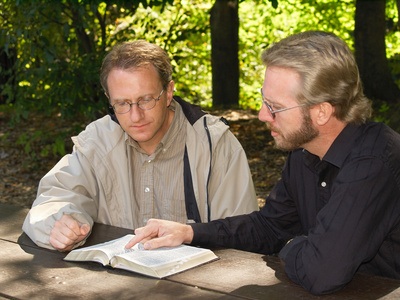
Purchased from fotilla.com

There are a few things people (including myself) do on Facebook that annoy me [1] but only one truly makes me angry.  That’s getting involved in a debate about divisive issues online.

My problem isn’t with the people who do it because they are usually defending a Christian worldview (a good thing), the problem is it’s usually a huge waste of time.

I used to enjoy having a friendly debate (argument) with a Christian friend over coffee about politics. Invariably after forty-five minutes defending our positions, we would realize the other person was saying basically the same thing.  Eventually we decided to focus our time on something more productive than talking in circles for about an hour 🙂

In the same way debating issues online is in my opinion pointless since you’re not going to change the other persons mind.

Those conversations with my friend (while in good-natured fun) featured a very unhealthy form of communication since my mind wasn’t focused on what he was saying but instead proving him wrong.

Whenever he made a statement my mind would immediately start thinking “how can I prove that statements wrong?” and start compiling a list of reasons why I’m right.

So I wasn’t actually listening to him at all.

It’s clear since my focus was on proving him wrong instead of understanding his position (or clarifying mine), there was almost no possibility of the conversation ever being productive, or someones mind being changed.

Online debates using websites like Facebook are like those conversations but have the added aspect of anonymity. Oh I’m aware that your name and pictures are on the screen, but this isn’t a face to face conversation, and often there is little chance of meeting that person in real life.

The idea of never physically meeting the person gives us freedom to be arrogant, antagonistic, and sarcastic among other things. It shouldn’t be surprising then that these online debates become a trading of verbal attacks instead of talking about the issues.

The worst part of about these exchanges is we are too busy throwing verbal punches, to clearly understand WHY they believe that way.

See behind the arguments, statements, and attacks is a worldview (a foundational group of beliefs that the individual uses to live by [2]) and that’s what should be dealt with in a spirit of love.

So we must put our verbal grenades down and make sure we understand what they believe.

  1. I hear you saying ________ is that right?
  2. Can I ask why you believe that?
  3. Hmm that’s interesting, what proof do you have for that view?
  4. Now would this mean you believe?

Now let me go ahead and make clear asking questions like this DOES NOT mean we agree with their view.

Instead this ensures we are dealing with the real issue [3] and starts a CONVERSATION instead of a non-stop verbal attack. Of course the next part of this is defining or clarifying the Christian worldview (more about that tomorrow).

Please understand I’m not saying we shouldn’t contend for the Faith online. But it’s become clear that arguing religious or political issues online does very little for the cause of Christ.

So it’s time for us to step aside from the “how do I prove this person wrong?” mindset, and make sure that we are really listening to what they have to say.


  1. Facebook rants, sharing too much information, phrasing updates in a way that it’s obvious your just trying to get likes or comments  ↩
  2. it’s the foundation for their morality (right or wrong), evaluating truth, and decision-making  ↩
  3. how the define truth, what defines morality  ↩

Exodus 14:30-31 Israel’s Spiritual Rollercoaster

IMG_0118

Exodus 14:30–31 Thus the Lord saved Israel that day from the hand of the Egyptians dead on the seashore

Israel saw the great power that the Lord used against the Egyptians, so they people feared the Lord, and they believed in God and in his servant Moses

As a teenager I used to spend a lot of time riding something that’s lovingly referred to as the “spiritual rollercoaster.”

Basically this involves lots of spiritual highs, which are soon followed by lows when I didn’t feel like obeying God at all.

The interesting thing is those spiritual mountaintops usually came along with an emotional high, and a period of time when my heart was complete focused on God. It got to the point where when something like a Christian camp, spiritual emphasis week, or retreat came up I would prepare myself for the spiritual high.

Every time I would come home with a heart committed to following the Lord, and every time life was back to normal less than a week later.

It didn’t matter how hard I worked, the spiritual low always came soon (even if I didn’t want it to).

Years later the Lord helped me realize there is only one way for a person to get off the spiritual rollercoaster, and it isn’t about working harder.

See the Jews had no problem fearing the Lord when they were surrounded by dead Egyptian bodies and spent most of Exodus fifteen praising Him (15:1–19). But an interesting thing happens a few days later.

Exodus 15:22 Then Moses made Israel set out from the Red Sea, and they went into the wilderness of Shur. They went three days in the wilderness and found no water. Exodus 15:23 When they came to Marah, they could not drink the water of Marah because it was bitter; therefore it was named Marah.b Exodus 15:24 And the people grumbled against Moses, saying, “What shall we drink?

Three days after saying “the Lord will reign forever and ever” [1] the Jews complained about not having water, and criticised Moses for leading them out there to die.

Now it’s REAL easy to condemn the Jews for this, but we all do the same thing don’t we?

The thing that’s important about Exodus fourteen and fifteen isn’t really their emotional response though, but WHY they feared the Lord.

They feared because they saw, and experienced Him

They couldn’t see the Lord while walking through the wilderness with no water

This doesn’t mean God wasn’t there (He was) but they took their eyes off of Him and focused it on the problem. Just like after a spiritual high, drama or issues of life would take my eyes off of God.

And immediately I would be overwhelmed.

So the search began for something that would bring my next spiritual mountaintop, but sadly I wouldn’t pursue the one thing that actually gave it to me…God’s presence.

Matt Papa in his awesome book “Look and Live” explains the hopelessness of trying to find this happiness outside of God.

The triune God is the only thing large enough and interesting enough to bear the weight of glory, and ultimately worship. Anything else will break your heart. Papa, Matt (2014–10–28). Look and Live: Behold the Soul-Thrilling, Sin-Destroying Glory of Christ (p. 33). Baker Publishing Group. Kindle Edition.

The way to get off my spiritual rollercoaster was to stop working (which my heart wanted to do) and seek God’s help.

Unfortunately there are still days I find myself pursuing that elusive mountaintop in my own strength, but thankfully when this happens God gives the strength and stop working, and simply listen to His voice.


  1. Exodus 15:18  ↩

Social-Media is About My Purpose

cropped-Screen-Shot-2015-02-02-at-1.39.58-PM.png

One of the things that really scared me when I took some time in December to evaluate my use of social-media was just how random my communication was.  It had gotten to the point where I would share whatever thought popped into my head [1].

It wasn’t really the randomness that bothered me (we are all random sometimes) the true problem was how little online communication fit with my calling or purpose.

The Bible clearly teaches that God has a special purpose for each one of us that we were created specifically for. He also equips us to accomplish that purpose with a love for doing it, a burden (emotional connection with those we minister to), abilities that fit with that purpose, and determination to finish it.

This means our responsibility is

  1.  To discover our purpose
  2. Accomplish it with God’s help

My purpose for instance is to be a Missionary [2] to Melbourne Australia, but it’s actually more specific than that.

  1. I am called to share the Gospel with Australians through ministries that meet their physical or emotional needs instead of relying on a “Church based outreach” [3].
  2. In a deeper sense my calling is to share the Gospel with children who don’t know Christ [4] through mentoring or tutoring ministries
  3. Using these ministries I will explain the Gospel in everyday conversation so that they can see their need of Christ

Basically my purpose would look something like this: “Reaching children and their families with ministries that meet their needs while explaining the Gospel.

Before moving on just let me clarify my calling doesn’t make me more important than others who aren’t called to full-time Christian ministry. In fact I sometimes find myself envious of those who have a regular job or focus on caring for their children, since it allows them to spend more time with a specific group of individuals [5] and have a deeper influence in their life.

The thing that bothered me in December was nobody would think my purpose to life was “reaching children with the Gospel” by looking at my Facebook page.

Instead they would probably think my purpose was running, sports (NFL in particular), or just making people laugh.
Of course there’s nothing really wrong with these kinds of things, but they don’t fit in with the perfect plan of God for my life.

So I decided to become purposeful about my communication online…not because I’m better than everyone else, but because I want every part of my life to fit into the purpose of God.

More than anything else this means thinking about what I’m sharing online before posting it.

  1. Is this explaining a key truth of Scripture?
  2. Does this illustrate the challenges of a Missionaries life? [6]
  3. Am I sharing a blessing or prayer request that comes from my ministry with children?
  4. Will this challenge others to share the Gospel of Christ?
  5. Am I sharing this just to make myself feel better?

These and other questions help me have a purpose or theme to my online communication.

Oh there will still be random posts and the occasional funny cat video (okay more often than that) but it’s my prayer that when people look at my page they won’t see a runner/comedian/sports fanatic, but a Missionary called to teach children the Gospel.


  1. which is very scary considering how my brain works sometimes 🙂  ↩
  2. someone who takes the Gospel to foreign cultures  ↩
  3. I of course believe the local Church is absolutely necessary, but since many in todays culture don’t view it as important and won’t come to us (the church) its our responsibility to go to them  ↩
  4. I have a love for children, and ability to connect with them  ↩
  5. coworkers, family  ↩
  6. so that people can pray for my needs  ↩

Exodus 14:24-27  The End of God’s Mercy

Ex. 14:24 And in the morning watch the LORD in the pillar of fire and of cloud looked down on the Egyptian forces and threw the Egyptian forces into a panic, 

Ex. 14:25 clogging their chariot wheels so that they drove heavily. And the Egyptians said, “Let us flee from before Israel, for the LORD fights for them against the Egyptians.” 

Ex. 14:27 So Moses stretched out his hand over the sea, and the sea returned to its normal course when the morning appeared. And as the Egyptians fled into it, the LORD threw the Egyptians into the midst of the sea. 

This is the kind of passage that critics of Christianity love to use when saying, “how could a loving God judge sin?”  The truth is Exodus 14:14-27 doesn’t make God look very loving.  

After all the Egyptians in 14:26 are fleeing (running away from) Israel and confessing they had no chance of escaping God.  It’s possible that if the Lord had let them go they would even worship Him instead of their pagan Gods!

Instead of having mercy God picked pharaohs army up, and then threw them forcefully into the red sea so none would live [1].

The Lord does this to teach a very important lesson…there  is an end to God’s mercy.

Actually there is nothing the Egyptians could have done to escape the judgment of God because the crossed the point of no return long before.

Note the words of God in Exodus 14

Ex. 14:2 “Tell the people of Israel to turn back and encamp in front of Pi-hahiroth, between Migdol and the sea, in front of Baal-zephon; you shall encamp facing it, by the sea. 

Ex. 14:3 For Pharaoh will say of the people of Israel, ‘They are wandering in the land; the wilderness has shut them in.’ 

Ex. 14:4 And I will harden Pharaoh’s heart, and he will pursue them, and I will get glory over Pharaoh and all his host, and the Egyptians shall know that I am the LORD.” And they did so. (emphasis added)

God tells the Jews Pharaoh will believe they are trapped and pursue them into a trap God had prepared for him.  The really interesting thing is God told them He would “harden Pharaoh’s heart.”  

This phrase speaks to the response of Pharaoh whenever God took  away one of Egypt’s plagues.  Every time he would ask Moses to pray it would be removed (with the understanding the Jews would be set free) but he always hardened his heart, or refused to obey.

In Exodus nine, after Moses is asked to take away a plague of painful boils on the Egyptians we find a different phrase.

Ex. 9:12 But the LORD hardened the heart of Pharaoh, and he did not listen to them, as the LORD had spoken to Moses. 

Do you see the difference?

Pharaoh’s hardening his heart meant he willingly chose to disobey

God hardening his heart meant he had no choice but to disobey

In other words, pharaoh could not choose to do the right thing, even if he wanted to. From that point forward he and all the Egyptian army were destined for destruction.

I don’t believe that God hardens the hearts of individuals today so that they cannot accept Christ as their Savior (the Gospel is offered to everyone) instead Egypt’s destruction is a warning to those who take the Grace of God for granted.

We do serve a gracious and merciful God who gives us many opportunities to turn or repent of sin.  But any individual (Believer or Unbeliever) who continually refuses to obey will have no choice but face His judgment.

There will come a time when we all repent of our sins and beg God for mercy.  Unfortunately some of us like the Egyptians will refuse until it’s just too late.

[1]: this is figurative language for God’s putting them in a place they couldn’t escape

Exodus 14:26-27 My Job is to Obey Even When It Seems Ridiculous

Photo courtesy of http://christianitymalaysia.com/wp/faith-presumption

Ex. 14:21   Then Moses stretched out his hand over the sea, and the LORD drove the sea back by a strong east wind all night and made the sea dry land, and the waters were divided.

Moses and the children of Israel had been given a promise from God that He would part the red sea so that they could cross over. As the Egyptian army got closer they waited impatiently for the moment of their deliverance. Finally God commanded Moses to stretch his hand over the water.

Wait…is that it?

Seriously Moses is about to be used by God to do something that would be remembered by the Jewish people to this day, and all he’s asked to do it stretch out his hand?

At first glance this would seem ridiculously easy, but it isn’t

When God chooses to use a person He usually asks them to do something ridiculous (like stretching your hand over a sea so that it will part). The entire Old Testament is filled with stories like this:

  1. When the Jews are dying from poisonous snake bites, God commands them to look at a golden snake for healing
  2. Moses provides water for the children of Israel by speaking to a rock
  3. God tells Joshua to break pots and shout so the wall of Jericho will fall down
  4. He gives Gideon a victory over 135,000 Midianites with 10,000 men after saying the army of 32,000 was too large [1]
  5. He kills Goliath (a man feared by the whole army of Israel) with a rock and sling.

The Lord doesn’t do this because He enjoys seeing us afraid, instead these situations are a test of our faith. God had promised to the Israelites He would give them the victory, and now He wanted to test just how much they believed that promise (Exodus 14:13–14).

I’m sure it would have been a lot easier for Moses if he had been given the power from God to part the Red Sea. But instead the Lord commanded him to just put out a hand believing God would keep His end of the bargain.

Because otherwise it would have been about Moses

If Moses had done this the children of Israel would have carried him around on their shoulders instead of giving Glory to God (Exodus 15:1–18) and the Egyptians would have run in fear of Moses instead of the Lord (Exodus 14:25).

So instead God wanted everyone to see this had nothing to do with Moses.

Though the passage doesn’t say this I imagine Moses may have had his doubts that the Lord would part the Red Sea. There may have been concern, worry, or fear on his face (what if God doesn’t keep His promise). He was probably just as confused as everyone else about God’s ridiculous command.

But the concern, fear, or confusion on the face of Moses as he stretched his hand over the sea brought great glory to God.

You see nobody in their right mind seeing Moses in this moment of weakness would attribute glory to Him. Instead it would be a response of, ”look at how confused and weak that guy is, this has to be God!”

And even today God calls us to obey while hearts are filled with fear and bodies are filled with weakness so the victory has to come from Him.

The hardest part of the Christian life isn’t achieving spectacular things for God that makes everyone look at us…in my experience the hardest part is simply stretching out our hand, and allowing God to do the rest.


  1. Judges 7  ↩