When #prayersforparis isn’t Enough

944X0BHEDNWith most of you I spent hours Friday night refreshing my twitter and facebook feeds in horror as we learned more about the terrorist attacks in Paris.  The more I read the more it burdened my heart for those people.

At the same time there was encouragement as individuals around the world sent encouraging messages, prayers, and shows of solidarity with the French people using social media.  The hashtag #prayersforparis dominated over the weekend and a huge amount of facebook users changed their profile pics with an overlay of the french flag (please forgive me for not doing so, can’t figure out how for some reason)

This isn’t the first time we have seen social media sights used for this purpose following a tragedy, and won’t be the last. There is no doubt in my mind the people of Paris are encouraged by individuals all around the world standing with them.

The question is, what do we do next?

One thing the Lord has been convicting me about lately is in situations like this some retweets, hashtags, and changing my profile to defend a particular cause is the extent of my involvement.  And while bringing attention to the need is a good thing, it is only the first step towards a solution.

In other words, we mourn and weep over the loss.  But then we wipe the tears out of our eyes and ask, “okay what are we going to do about this?”

Before getting into what I personally believe we should do about the problem, let me tell you what we shouldn’t do…..we shouldn’t flood facebook or twitter with articles defending our views on the situation (refugees should not be allowed in the country, or such a small amount of Muslims are actually violent we shouldn’t treat them all like terrorists).

Now as your getting ready to type that angry comment please hear me out.

I’m not saying there isn’t a place for education following these attacks.  The problem is sending these articles or pictures is just too easy.  Just like typing a hashtag isn’t enough to fix the challenges of ISIS, clicking share on a website isn’t going to do it either.  Instead sharing articles is another first step which leaves us with the same question “what are we going to do about it?”

In my humble opinion the answer is to become students of the worlds culure

As an American who lives in foreign Countries I experienced firsthand how living in the US had given me tunnel-vision so to speak because I didn’t have a lot of knowledge about what was going on in the rest of the world.  The joke Australians tell is when American news programs share news from around the world it’s what we (the US) are doing around the world 🙂  This focus on local and national news from the media means it’s OUR RESPONSIBILITY to learn more about what’s going on in the world.

Using Paris as an illustration the Lord has challenged me to start asking some hard questions about what happened there.

  1. How did this happen?
  2. Why didn’t the focus on surveillance following January’s attack do anything to stop it
  3. Why is ISIS referring to France as the central power of Europe?
  4. Why does France refuse to refer to them as ISIS?
  5. What does this have to do with the attacks in January?
  6. How is this going to affect our relationship with other Countries?

The point is we must go past the hashtags, filters, and easy share articles in order to create a working view of our own on what happened Friday night, and how it affects the world moving forward.

  1. By reading in-depth articles online
  2. Studying the history of ISIS and Islam
  3. Getting books that discuss the growth of terrorist attacks
  4. Following websites or newspapers from other Countries that share events from their perspective

So go ahead and keep using the #prayersforparis hashtag

And change your profile picture

Share those articles

Even write a post or two if you feel like it

But once the tears have dried up, understand you and I need to become students of whats happening in other cultures before it enters our own borders.
The Original “Safe Space”

21


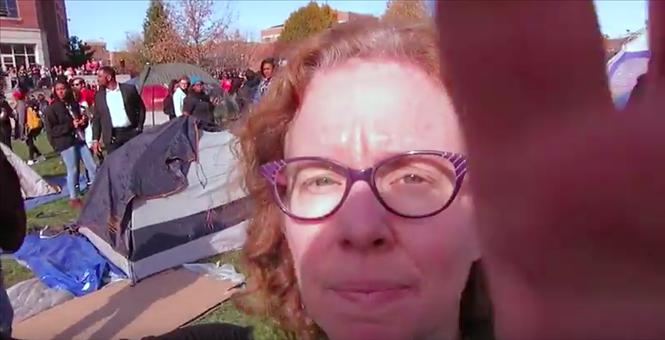
On Monday the focus of media coverage at the University of Missouri moved from racial-injustice and concern over campus violence to freedom of speech as a video emerged student-journalist Tim Tai attempted to photograph and enter the protestors campsite.

The response was a demand that he leave and after refusing assistant professor Melissa Quick physically blocked Tai from moving further, tried to grab the video camera being held by student Mark Schierbecker, and requested muscle to help forcefully move Tim from the area.

When asked why he wasn’t allowed to be there Click told him among other things that this was a “safe space.”  This is a popular phrase used on University campuses for an area where people are able to share their views without being challenged.  It also gives the idea of not being faced with information that would be viewed offensive or frightening.

I personally find the idea of a safe space ridiculous since it gives a warped view of reality.  The real world is to be honest many things, but safe isn’t one of them.  And sending out a generation of College graduates who have no experience of their views being challenged is incredibly offensive. 

But of course calling these safe places ridiculous doesn’t really deal with the problem, to do that we must go to the original safe space.

You see this idea didn’t just come up overnight.  A young adult didn’t just wake up one morning and say “you know what, I don’t think anybody has the right to tell me I’m wrong, or share an opposing view anymore.”  Instead this idea was planted in their minds by online communication (particularly through social media) and it grew over time.

I read an interesting article this week called “How (not) to respond to offensive ideas” that describes how we view people with a disagreeing viewpoint either as a terrible person (labeling them) or ourselves as a victim.

It is too easy to retreat into labels which discredit and disgrace others. homophobe, racist, sexist: these all have a place, but we are generally too quick to use them when we feel our views or even our very selves have been slighted in any way. An opinion expressed online is often not a personal attack.

And we are not victims when other people think different thoughts to us. We must relinquish the culture of victimhood that is taking society captive, not least because we are not all victims, and to cry foul after reading something disagreeable to us diminishes the grievances of actual victims.

The author (Tess Holgate) continues by explaining this response to opposing viewpoints will eventually create people who cannot defend their own views.  This is incredibly sad because it’s my belief websites like Facebook were originally created for conversation about difficult issues among other things.  Today it’s just about attacking those whose views are different from ours.

And it isn’t just social media.  A growing number of news-sites have decided to either completely shut down their comments sections, or add a lot more control to what’s posted.  Again what was originally meant for healthy conversation has turned into a war zone.

As we spend more and more time slinging mud instead of defending our views online this starts to affect our day-to-day conversations.  Things as simple as listening to a persons viewpoint instead of trying to figure out a way to prove them wrong have been forgotten.

There is no easy answer to equipping a generation of college students for a world that isn’t filled with safe spaces.  But perhaps the first step in that direction is reclaiming a place that was originally meant for conversation and wrestle together with the deep issues of society for the Glory of God.

A Mountaintop followed by a Viking Funeral

JOQIB2Q07I


I love being a Missionary, serving God by proclaiming the Gospel in foreign Countries is one of the most fulfilling, and at the same time frightening things a person can do with their lives.  That mixture of success and fear is why I like to define missions as “a mountaintop followed by a Viking funeral” Editors note:  This refers to the Vikings habit of putting their dead on a raft and then burning it as the body went out to sea.  Today it means giving up on an idea, or admitting it isn’t working.

Yesterday afternoon sixteen children visited my house on the way home from School.  While this huge group was partly due to the fact that it was raining, most of them truly wanted to be there.  After some juice, games, story, and an attempt at playing “the quiet game” I sent the kids home and spent about an hour teaching two of them computers.

This “mountaintop experience” was followed by two adults forgetting to come meet me for computer tutoring (again) and a painful reminder while I’m doing an awesome job of reaching the children of Barrouallie, my ministry with their parents needs lots of work. 

A few hours later I sat on the porch drinking a cup of coffee while the rain poured down and placed those computer outreach plans on a funeral pyre, before sending them into the dark Vincentian night.

Now please don’t think I’m feeling sorry for myself or trying to gain pity.  The truth is putting an end to those plans was a best thing I could have done.  Early in ministry setbacks would be viewed as God’s way of saying “you need to work harder,” but experience (and inability to open closed doors) helps me hear God saying “there is a better way.”

Of course this doesn’t mean I run around with a gas can and torch looking for anything that can go up in a blaze of glory.  Instead there is a willingness on my part to admit when a plan isn’t working.

That’s actually the hardest thing about walking away from a ministry…there’s always a part of me that feels like admitting things could be done better is also confessing I’m an utter failure.  Of course this isn’t true in fact it shows a great deal of courage.

But that doesn’t make holding the match in your hand any easier

What does make it easier is the knowledge God is honored when we hold the precious things of life with an open hand so that He can take them whenever He wishes.  And as a loving Father does He will always give us something better in return.

I’m not sure how the Lord will use me to reach the adults of Barrouallie.  What I am sure of is He has a perfect plan, and that knowledge gives the strength to set my plans aflame.

Isolation Desired and Achieved

WBWKY1FQ2I


Last weekend I read a sentence from “Unsocial Media” an article written Tony Reinke for Desiring God  that hit me like a ton of bricks.  The quote is actually by Reinke from Stephen Marche and his article “Is Facebook making us Lonely” The interesting thing is the more I’ve meditated on that statement, the more it meant to me.

“The problem is that we invite loneliness, even though it makes us miserable. The history of our use of technology is a history of isolation desired and achieved.”

That idea of isolation being desired and achieved illustrates for me the relationship many people (myself included) have with their electronic devices.

Reinke does an excellent job of explaining how technology used to be a community based thing that the family gathered themselves around, now instead it has become something only enjoyed by individuals

Isolation was made possible by advances in video. The community cinema gave way to a large shared television in each family’s home, which gave way to portable televisions, and now personal LED TVs in every bedroom.

When it comes to music, this technological trajectory is even clearer. The live symphony on a Saturday evening was, for many people, replaced by the stationary phonograph (record player) in the family room, which was replaced by a large transistor radio, which was replaced by a portable transistor radio, which was replaced by a boombox with open speakers over the shoulder, which was replaced by a Walkman clipped to the waist, which was replaced by a tiny iPod clipped to the sleeve. Music went from a social community experience, to a shared family experience, and now to a personal headphones experience.

Going along with that isolation idea today media (especially on our phones) are used as an escape from reality .

In a way individuals can escape the world filled with stress, pain, and conflict in favor of one they have complete control over.  A world filled with Netflix queues of favorite programs, personalized music playlists,  facebook posts that make us look awesome, and Instagram feeds with perfectly timed photos.

There is something enjoyable about having a part of life that we can totally control.  However once the isolation we long for so much is achieved we will inevitably realize it won’t satisfy.

Sources Cited:

http://www.desiringgod.org/articles/unsocial-media

http://www.theatlantic.com/magazine/archive/2012/05/is-facebook-making-us-lonely/308930/


When a Red Cup Isn’t Just a Red Cup

IMG_0467


Okay first things first-I happen to be a Christian that drinks Starbucks coffee.  I’m aware that many Believers don’t do this, and would view my buying coffee from them as wrong, and aware that they don’t hold to a Christian worldview (being anti-family and anti-military).  However this gives opportunities to develop relationships with unbelievers in the community and share the Gospel.

Being a starbucks drinker I found myself shaking my head more than once over the last week and saying “seriously?  It’s just a cup!”  Of course I am referring to the fact that “merry Christmas” is no longer on the Starbucks red holiday cup this year.

Those who have begun boycotting Starbucks and speaking against them would respond to my confusion/frustration by saying “it’s not about the cup”…and they actually have a point.

Now some may be angry just because the word “Christmas” is left off a cup.  But behind the anger is a much more terrifying message; We are no longer a Christian nation.

There was a time when Bible believing Christians were the moral majority in America and had a great amount of influence upon the culture.  Sadly today that’s no longer true.  Now instead of having a loud and clear voice we are finding our cultural voices silenced in favor of the new moral majority (the LGBT community)

In a way the Starbucks red cup is a reminder that we no longer hold the political power or influence Christians once had.  And unlike other things (like the court decisions on marriage) Believers can DO SOMETHING about this through social-media and their personal choices.

But the holiday cup goes even deeper than that because it affects our relationship with the culture.  After learning we aren’t the moral majority anymore Christians have three choices.

  1. We can stand for Christian convictions
  2. We can admit to the fact that we have no influence and just consume what the culture gives us
  3. Or we can ignore the fact that our culture is no longer Christian

I’m not going to come out here and tell everyone what to do in this situation (there are plenty of people doing that already) but instead am making the point that we need to realize our time as the moral majority is over.  So instead of waiting for people to come to us we must prayerfully take the Gospel to them.

Maybe the red cups more than anything illustrate the fact that our world is broken, and doesn’t even realize it.  And each red cup should be a fresh vision of that brokenness motivating us to share the Glorious Gospel of Christ.