The Messiah Complex vs The Entrepreneur

This morning I read an interesting article from Acton Institute Powerblog  but originally found on the Foundation for Economic Education Website entitled “Local Entrepreneurs, not foreign-do gooders are the true Hope of Africa.”  It pointed out the fact that though lots of foreign aid is given towards countries with extreme poverty problems like Africa, it doesn’t seem to be making a huge difference.

I found this article interesting because it highlighted a common problem for missionaries, specifically that even though you come to meet spiritual needs, there area always going to be physical ones as well.  And how you choose to meet those needs (or whether you meet them at all) is a very big decision.

To be perfectly honest my first thought when seeing people in need is to help them, however its very easy for that to become a “Messiah Complex.”  This idea comes from a blog post by Joseph Sunde in March 2016 particularly dealing with a messiah complex in short-term missions.  He describes it this way…

When you roll in and hand out a bunch of soccer balls and candy to kids, it undermines the bridges of trust built through partnering and instead sends the message of easy “Aid” and spreads dependency. It makes it much harder on them when you leave when they wonder why this friend who has been staying with them over years never “gives them stuff.” If you have gifts, only bring what they’ve asked and let them hand them out at a time they deem appropriate…

In other words giving things to people in need is good…but it can also create a sense of dependency upon those gifts in the future.

The fact that aid can develop a dependency can lead to lots of frustration, or an unwillingness to give things away.  That kind of attitude shared in my blog post “why I don’t give things away” in March was an attempt to find a middle ground with that struggle making people “earn gifts,” however since then I’ve changed my mind on the subject and decided this kind of attitude doesn’t share the love of Christ.

Instead of making people earn things I give out use of items freely (such as juice, my tablet, internet or computer) offer water to anyone who wants it, and will occasionally give out a few dollars if it’s needed, but prefer to spend money on fresh fruits and vegetables grown by Vincy’s.  On the other hand I know that giving out tablet time or a few dollars isn’t going to meet the financial needs of St. Vincent (our area in particular needs new jobs)….that is accomplished by funding local entrepreneurs.

The post this morning described an organization that instead of giving large amounts of financial aid in Africa, looked for people within the country who had created new ways of dealing with needs (lack of water, food).  The group then would help them with financial aid or training if needed until their business could be taught and reproduced in other villages.  The goal was to have workshops or meetings were Africans can immediately go home and begin doing that for themselves.  While that may not be look as spectacular as the financial aid philosophy, it will give a long-term impact as the people will eventually become self funding.

The bottom line is though Missionaries aren’t called to meet the financial needs of a culture, we cannot be blind to them either.  And much of what we (Missionaries, myself included) in love and generosity can create a messiah complex where people have an expectation of receiving things.  The answer isn’t slamming the door shut or asking “why they deserve something” as I used to believe, but looking for entrepreneurs who are working to find a way of doing things for themselves, and meeting needs creatively.

There will always sadly be people who hold their hands out for a dollar in every country but won’t work for it (especially America) so as Christians we must make sure the majority of our funds goes towards those who will use it to help and teach others.

Why Missionaries should stop Planting Churches 


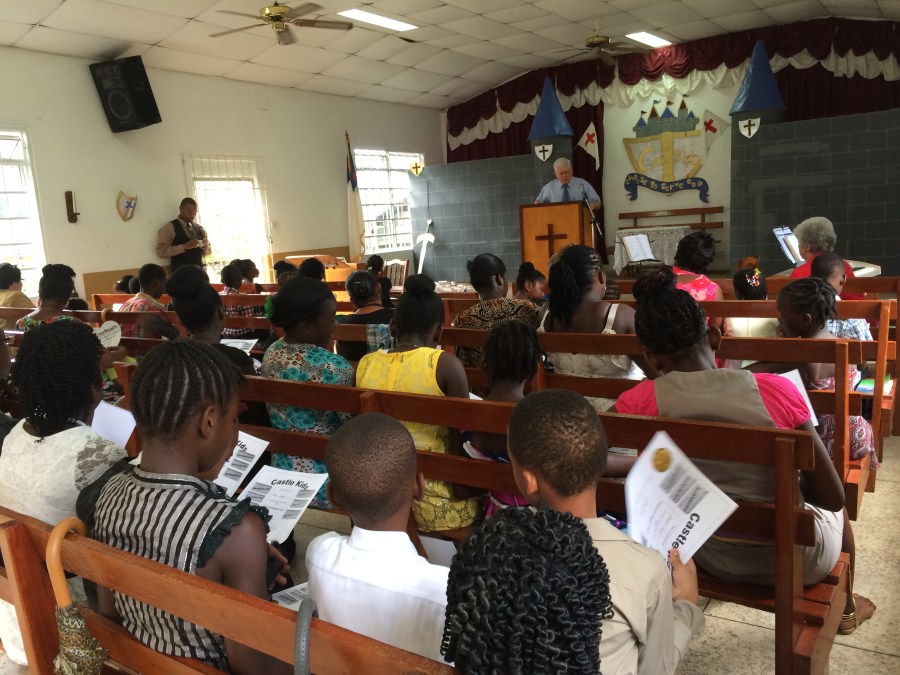
A few weeks ago I began traveling to Other Baptist Churches in St. Vincent on Sunday mornings.  Though they often ask my to speak this isn’t about preaching, but developing relationships with Believers outside of Barrouallie, and understanding better the spiritual needs of Vincentian Churches.

Yesterday the Lord allowed me to visit Bethany Baptist Church in the town of Stubbs (about an hour away).  Before Sunday School I was chatting with some members  about how I and other missionaries can help St. Vincent’s Christians and one of them asked why we (missionaries) always planted new Churches when there were already established Churches that needed help.

Of course Church-planting (starting a new Church in an unchurched area)  has always been a very important part of missions.  However in many mission fields (St. Vincent included) it’s becoming harder and harder to find areas that are truly “unchurched.”

For instance in Barrouallie and it’s surrounding area alone i’ve been told you can find ten different Churches.  Now it’s true not all of those will be Gospel preaching Bible believing Churches (we are surrounded by Pentecostal) so there can be a need even in “churched areas” for Church planting.  Yet I found myself driving past at least three different Bible believing Churches in less than 20 minutes on my way to Stubbs yesterday.

Which brings us to the Church members question…why plant a Church when established ones are in need?

There are actually some good reasons for this;

  1. These Churches are normally led by a National, and since our goal is to equip local pastors a Missionary would prefer to start a new work
  2. While these Churches have great needs, there are usually Vincentian Believers already attending who could meet those needs (a missionaries place is to encourage or motivate and train those believers)
  3. And the financial support and training missionaries have make it easier for them to plant a new Church

While there other reasons for this, in my heart I believe one of the greatest reasons church planting is chosen over church revitalization is it’s just easier.

Now I realize that when most people think about Church planting the word “easy” doesn’t come to mind.  But  in this situation you start with a clean slate.   With “Church revitalization” however missionaries may have to deal with lots of drama.

  1. A smaller group of believers who may be discouraged, or wounded by a former missionary or pastor
  2. Instead of creating your own own culture (philosophy of ministry) you adapt to the Churches culture that already exists.
  3. Since we are dealing with human beings there’s bound to be relational conflict
  4. It always takes time to develop relationships or earn trust
  5. And some smaller churches have huge problems that must be dealt with right away
  6. But even though Church revitalization is messy and filled with challenge, there is a far greater need for it today than Church planting.

Editors Note:  Please don’t see this as a criticism of just Vincentian Churches, there is an even greater need for church’s revitalization ministries in the United States.

More than anything else the difference between Church planting and Church Revitalization is the message it sends

Church planting says to the Nationals “stand aside and let me do the work”

Church revitalization says to the Nationals “let me help you do the work”

In other words Church revitalization focuses on training, discipleship, and leadership development of members who are already there.  Church planting lends itself towards a pioneering view of ministry which if we aren’t careful can become just about the Missionary.

As we got ready for Sunday school in Stubbs one of the men began listing areas outside of Kingstown (farther north) where almost all of the Churches were struggling, and there was nobody to help them.  As I drove back to Barrouallie that afternoon the Lord placed a burden upon my heart for Church revitalizing missionaries who would dive into the drama, and grow those struggling Churches instead of planting new ones.

Hanging Up My Lashing Hat

IMG_0070

About 5:30 last night I slowly walked onto my porch and sank down into a chair.  It had been a long afternoon and my legs were killing me, so I decided to fix some french-fries for dinner (my favorite comfort food).  About thirty-minutes later as I watched sports a neighborhood boy walked onto the porch just at the moment my fries were ready (I would accuse him for coming at that moment on purpose, but have no idea how he could know they were ready).  As we sat and talked for a while part of me wanted to keep the fries a secret, but decided to share them anyway.  As I was putting the fries on the plate a DIFFERENT VOICE called my name and the temptation to hide my fries was even greater!

I brought the plate outside and instructed them to take five fries each.  This began a game I like to call “get Mr. John to chase you around the porch and steal fries while his back is turned.”  This eventually turned into another crowd favorite “lashing hat” which involved my chasing the kids and hitting them with a kangaroo leather hat (not too hard) as they laughed hysterically.  Somewhere during this a THIRD child showed up and as you can imagine they consumed my comfort food in about five minutes (I did get to eat a few of them.)

Things like sharing a meal and playing “lashing hat” are actually a vital part to ministry with children because it develops relationships, and are teaching moments. Many deep conversations have occurred over pancakes, french-fries, and the occasional vegetable.  However it’s extremely easy to get so wrapped up in playing games that the Gospel isn’t shared.

The Lord convicted my heart last night as I thought about how much time had been spent on those relationship development ministries, and then comparing that with how many moments the Gospel was shared in a direct way.  I do my best to share the Gospel during those relationship development moments, but as you can imagine the kids only pay attention to the fun stuff.   And if kids only remember things like tablet time, juice, candy, and a lashing hat instead of the Gospel when my name’s mentioned there is a problem.

So as much as it hurts me I have to hang up the lashing hat

In other words chasing kids around the porch, lashing them, and sharing meals will no longer be a big part of ministry (only for special occasions), and to be honest Bible stories will probably come to an end as well (they know them all anyways).  In it’s place will be teaching about the Gospel, and how it affects their lives.

Don’t get me wrong I’m not going to become Ebeneezer Scrooge and start telling punk kids to “get off my lawn.”  I’m sure they will always have fun with Mr John no matter what I do…yet its my responsibility as a Missionary to give them a better reason to come to my house than stealing french-fries.


Moving from the Religiouis Conversation to a Church Service 

IMG_0090

A few weeks after arriving in Barrouallie for a six-month ministry term I met a man named Philip (not his real name) and we ended up talking for almost forty-five minutes about St. Vincent, the needs of Barrouallie, and even his spiritual beliefs (Phillip doesn’t know the Lord).  Since that first conversation its been a goal of mine to get Phillip attending services at Tabernacle since he didn’t attend anywhere, and the local Church is in my opinion Gods chosen tool for missions.

Continue reading “Moving from the Religiouis Conversation to a Church Service “

The Ministry of Small Talk

waterAfter a little Over a year in Barrouallie (arrived September 7, 2015) I’m used to the way things are done and have seen the Lord open many doors of ministry.  However I still struggle with small-talk….and I’m learning that is a HUGE part of missions.

I’m an introvert at heart which means taking the first step in communication is difficult, but after that talking is a lot easier.  People have said when they first met me they tried to make me talk, but after that they tried to get me to shut up :-).

Being an introvert means small-talk is difficult to begin (especially when I don’t know people) and quite often leads to awkwardness.  I find myself agreeing with author Sammy Rhodes

If I could have any superpower, it would be the ability to do small talk well, because anyone who does it well is a superhero as far as I’m concerned. I’m more like the Aquaman of small talk: people don’t remember much about me except that I’m weird.  “From This is Awkward” by Sammy Rhodes

The thing about small-talk (having an extended conversation with others ) is difficult even for extroverted people because it’s filled with things like awkwardness, uncomfortable silences, or lulls in the conversation.  Maybe the reason this is so hard (and why I’m so bad at it) is many of us no longer view small-talk as an important part of life.

A very important lesson the Lord has taught me during my time in Barrouallie is small talk is ministry.  Last week I wrote a post about my view of ministry as activity (why I need a day off).  This activity centered philosophy caused me to not only views things like study or writing as unimportant because there’s no direct ministry, but at times viewed small-talk as laziness.

In my mind since small-talk is wasn’t part of ministry and it led to awkwardness there wasn’t any place for it in life;

I have never been more wrong

Yesterday during one of my afternoon walks the Lord convicted me about the fact that I don’t know the names of over 50% of the people who greet me in Barrouallie .  Everyone happens to know my name (has to do with the fact that I’m one of the only white people in town) but ever time they say “good afternoon” I always respond with “buddy, pal, brother” or something like that.  A few seconds after realizing that a thought came into my mind…

How can you reach someone with the Gospel if you don’t even know their name?

It’s true that Churches don’t support me so that I can sit down and talk with people all day, but it’s also true that NEVER sitting down and talking with them is a huge detriment to ministry. I’m thankful for the conviction of God yesterday that led me to turn off all my electronics, leave my phones at home, and just take a walk this morning.  A walk where more than once I said “I’m so sorry but I completely forgot your name.”